
When I was a kid, I loved to watch Nature and Nova on PBS. We were never wealthy enough to afford cable TV, but I rarely lamented that circumstance, since PBS had such good programming. By far, my favorite animals to see and learn about on the nature channel were the cephalopods. Something about their weird bodies and remarkable intelligence was just mesmerizing to me.
If you aren’t familiar with Cephalopods, now is a great time to become so. They are saltwater-dwelling invertebrates primarily characterized by large, prominent heads and numerous arms or tentacles. They are known for often having the ability to expel ink, and have a reputation for being intelligent. Part of why I find them so charming is the behavior they commonly exhibit in captivity, such as escaping and later returning to their tanks, and socializing with other fish.

There are four categories of cephalopods: squid, octopuses, cuttlefish, and nautiluses. The nautilus will be the primary focus of this post.
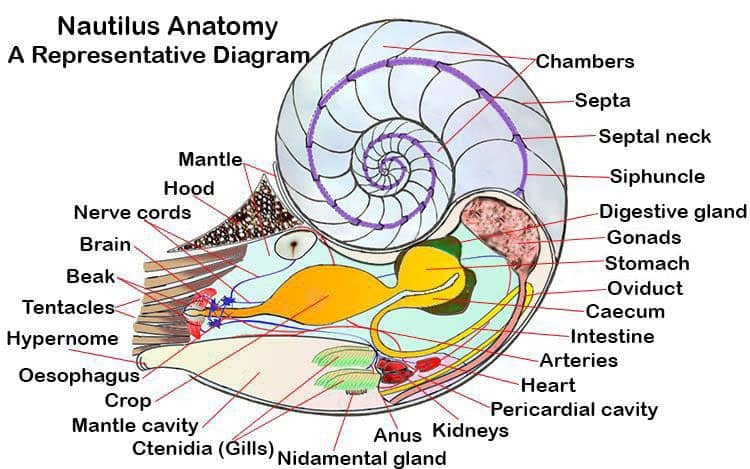
Nautiluses are distinct from other cephalopods in a few ways. First, they are the only type of cephalopod that has a shell. A nautilus shell is pretty recognizable and, I think, beautiful.
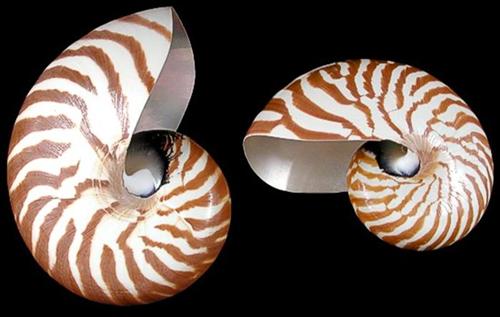
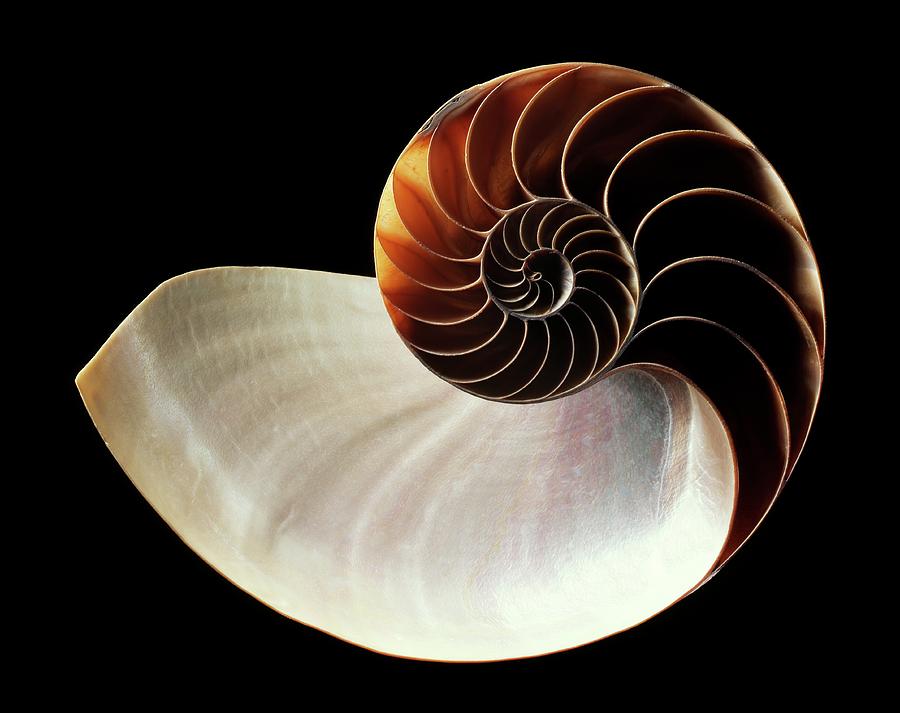
A nautilus hatches with a four-chamber shell, and creates new, larger chambers as it grows. A full grown adult may have thirty or more chambers in its shell. Depending on the species, the diameter of the shell can range in diameter from about four and a half inches up to ten inches.
A second distinction from other cephalopods is that the number of tentacles they possess can vary greatly. Depending on the individual nautilus, it may be anywhere from about fifty to ninety or more.
There are three different types of tentacles a nautilus has, the first of which is ocular. There is a set of pre-ocular and a set of post-ocular tentacles, which just means that one set is in front of the eyes, and one set is behind the eyes. As far as we know, the main function these small tentacles serve is that of a sensor, to detect changes in the environment around the nautilus.

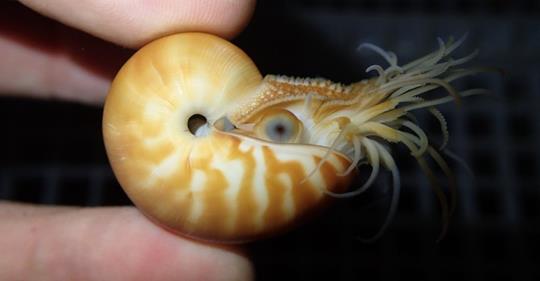
The second type of tentacle is called a digital tentacle. These are the most visible tentacles, and the ones you will notice upon first glance. Each nautilus has nineteen pairs of digital tentacles, for a total of thirty-eight. They form an outer ring around its mouth. The digital tentacles are primarily used for sensing the environment around the nautilus, searching for and grabbing food to deliver to the mouth.
A nautilus tentacle has two parts, the sheath and the cirrus. The cirrus is thin and flexible, and retracts inside the thicker, tougher sheath when not in use. Unlike other cephalopods, nautiluses do not have suckers on their tentacles. Instead, the cirri secrete an adhesive mucus that aids in their ability to grab things.
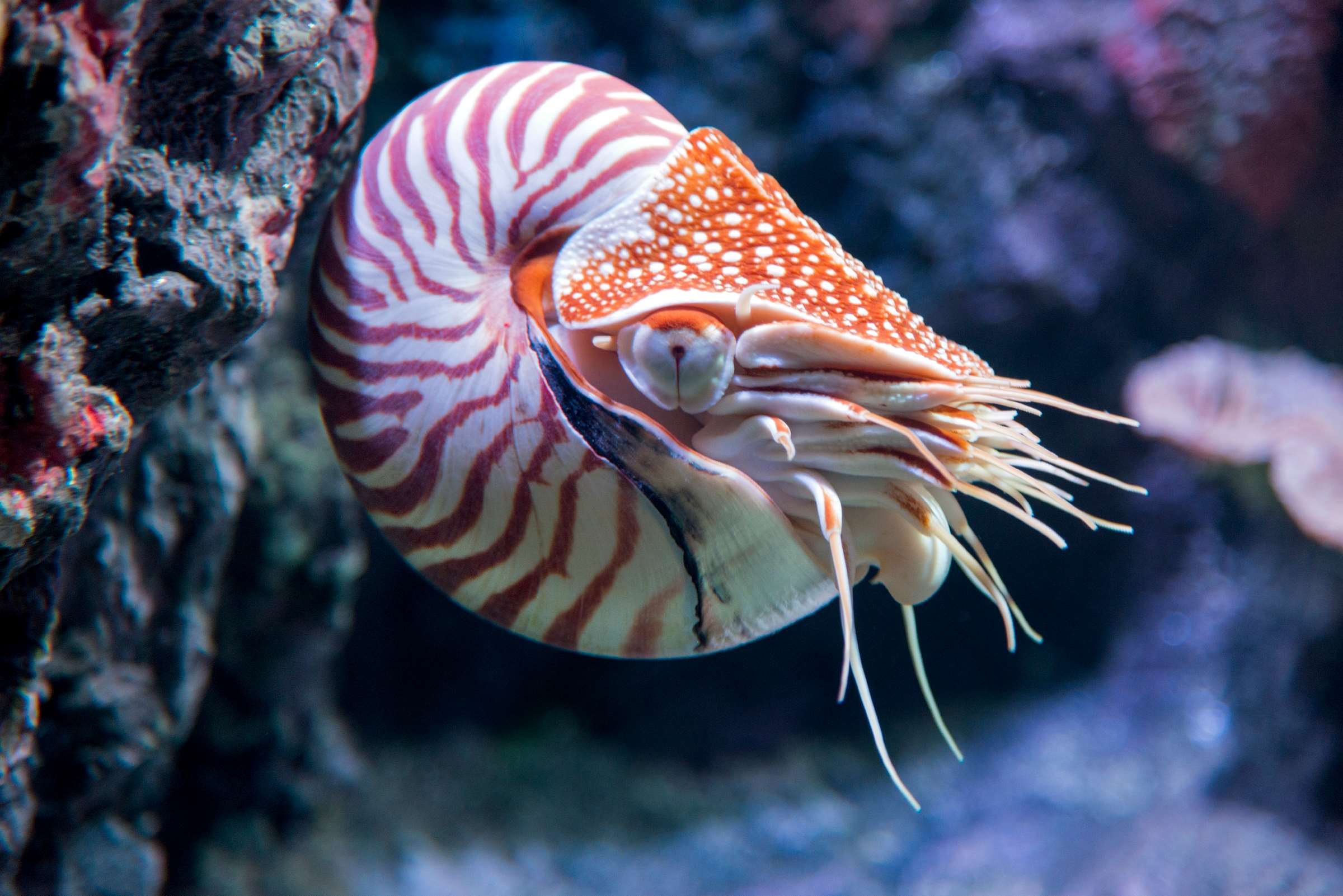
Inside the ring of digital tentacles are the radial tentacles, the third type. These are smaller, surround the mouth, and are generally not visible. The large range in number of tentacles a nautilus can have comes from the differing amounts of radial tentacles between individuals. Radial tentacles likely function as additional chemosensors, though in males, some of them are adapted to serve as a sexual organ that delivers sperm during the nautilus’s attempt at reproduction.
The large, triangular structure at the top of the nautilus is called the hood. It is similar to the sheath part of the tentacles, and closes the rest of the body inside the shell.
Another defining feature of the nautilus is its eye. While other cephalopods have lenses, nautilus eyes do not. This means that its pinhole-style eye is unable to focus, and is exposed to the water. This lack of a lens means that the internal pressure of the eye is easily able to adjust to match the external pressure, as the animal moves to lowers depths during the day to avoid predators. Nautiluses are likely color blind (as are most cephalopods), and their eyes are probably used primarily for light detection rather than navigation or finding prey, since they are unable to focus or detect differences in color. Their eyes are large and contain about four million receptors, more than any other invertebrates, with the exception of other cephalopods.
In the center of a nautilus’s ring of tentacles lies its mouth. Around the mouth is a beak used to help break open the shells of its prey. Food then passes into the mouth, which contains rows of teeth. Next is the esophagus, which goes through the nautilus’s brain. After being ground up in the stomach, food then moves into an organ called the caecum, which uses enzymes to digest it further. It then passes through the nautilus’s looping intestines before being expelled from the body.
Like other cephalopods, the nautilus has a ring-shaped brain that sits behind the mouth and circles the esophagus. The regions of the brain dedicated to sight and locomotion are smaller than those of other cephalopods such as octopuses and cuttlefish, so they are less intelligent and generally less mobile. The olfactory region, however, is larger, so they may have an advanced sense of smell.
In regard to movement, nautiluses have two methods. The first is jet propulsion, in which they bring water into their bodies, then quickly expel it, pushing them backward. The second mechanism is more complex. Nautiluses can control their buoyancy by changing the ratio of gas to water in the chambers of their shells, using an organ called the siphuncle.
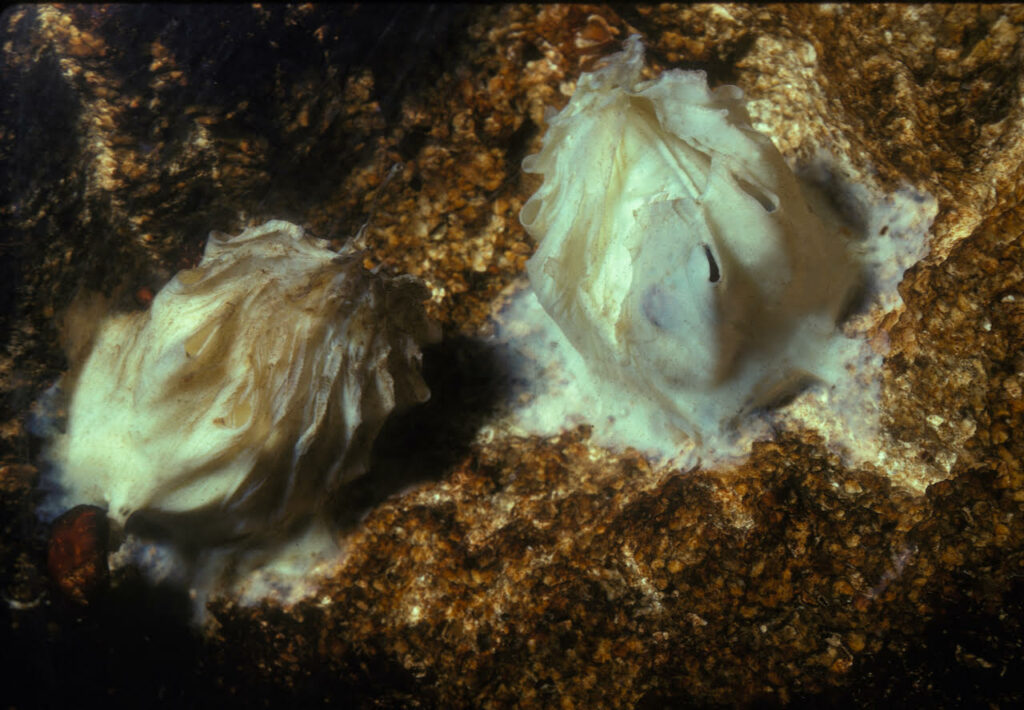
Nautiluses reach sexual maturity at about fifteen years old, and can live to be twenty or more years old. This long lifespan is another distinguishing characteristic of the nautilus, as it is significantly longer than other cephalopods. Female nautiluses lay eggs once per year, attaching either single or small batches of eggs to rocks in warm water. After eight to twelve months, the eggs hatch.
Naut a lot of people know much about cephalopods, so I hope that this introduction to one of my favorite animals gave you a new or renewed appreciation for the nautilus.
 In All Uncertain Terms
Leave a comment