I recently watched the show Fleabag. I can’t remember why, but it was mentioned in an offhand comment in something or other to which I was listening, probably a podcast or video essay. I wish I could recollect what it was, if only to mentally thank the person for introducing me to the series. Whatever it was, Fleabag was not the subject, but the brief description given was enough to pique my interest. Unaware it was on Amazon Prime, I placed the DVD on hold to be transferred from another Missouri library to my own, and waited patiently. I now know it was a happy accident that I borrowed from the library something I could have just streamed from a service I already have, because I think the interruptions from ads would have made the show less captivating.
I was hooked from the beginning. I loved the dry, speedy, witty remarks to the camera between lines of dialogue, the smirks and eye rolls and groans. The camera angles and movements, in addition to the fourth-wall breaking, make the viewer feel as though she is really there in the room. The short episodes and seasons and quick-cuts between scenes cause the story to trot along and keep the audience engaged. I watched, as I do nearly all television, while folding laundry, but often found myself stalled in my chore and glued to the screen.
Since I can’t recall how I was introduced, I can hardly remember my expectations going in, but I do know this: I did NOT think I would cry so much. Yes, I knew the story followed a woman learning to live after the death of her best friend, but I thought the comedy-drama would lean more comedy. Don’t get me wrong; I laughed a lot. Mere seconds post-mirth, however, came a river of tears. It was devastating and hopeful and touching and bleak.
I’m a sucker for British shows, but also for media that presents Christians and Christianity in a complex (correct) light. I consume primarily art and media made by atheists or agnostics, and I’ve recently heard several YouTubers whom I frequently watch vocalize the same sentiment, usually when critiquing Christianity or speaking about an aspect of Christian theology about which they know little: “Sorry if I’m offending any Christians, but let’s be honest. . . The Christians aren’t watching this video.”
I don’t find their comments offensive, either their critiques or their assumptions that Christians don’t watch their videos, but I do find it funny. I don’t see why their content, whether about art and writing, science, philosophy, politics, or culture, would be uninteresting or off-putting to me, purely because of their personal atheism. We may disagree about the nature of the universe, the reason for morality, but we both still strive for truth and goodness and beauty. That doesn’t always look the same, but I doubt anyone in the world will find someone with whom they agree 100%, and besides, it would be boring if they did. I don’t want to read and watch media that just tells me I’m completely correct about everything I think; I want media that stretches and prods and challenges me, that makes me a more thoughtful, empathetic, well-rounded person.
Because of this evident perception of Christians as rather one-note individuals who only engage with things made by their own which affirm their beliefs, I’m always delighted when I find something made by an atheist that has a complex Christian character. Wake Up Dead Man is another example of this. My viewing partners for this movie enjoyed it enough, but easily moved on to other things. I was enthralled. It received some criticism, most notably from Ben Shapiro, for being anti-religion, but I think this is a shallow view to hold. The movie does portray a charismatic, bold, aggressive priest who holds very politically conservative beliefs and uses his authority and influence over his congregation to manipulate and abuse and exploit. However, he is juxtaposed with another priest who embodies what good Christian leadership should be. He is not perfect; he struggles with anger and a violent past, but he is also kind, gentle, honest, and a good listener. I think the film does an excellent job of showing both the dangers and blessings of religion.
In the second season of Fleabag, the main character meets a priest. She initially dismisses him, but as the night goes on, is charmed by his humor and honesty. They become friends, and he is shown to be awkward, genuine, humble, joyous, evasive at times, with a checkered past and perhaps a too-strong affinity for alcohol. Though much younger and freer, in some ways he reminds me of my own pastor. During the series he sins in a major way, but ultimately returns to his devotion to God. As a staunch atheist, Fleabag has many conversations with him about their respective beliefs, and at the end of the season, they depart from each other having neither one changed in their faith, but still loving and respecting the other.
A similar dynamic is present in Wake Up Dead Man. Benoit Blanc, the atheist detective, begins the movie with an apparently very cynical view of religion. As he works with Father Jud Duplenticy, sees his kindness, he softens. One particular scene, that makes me tear up just to describe, shows Blanc and Duplenticy investigating the murder around which the movie is centered. Jud calls a woman named Louise to ask her about a particular piece of information that is important to the thread they are following. She is rambling and verbose, and, feeling the urgency of the matter, Jud begins to grow frustrated. After she gives him the information he needs, he tries to quickly end the call. She says, “Hey, Father, can I ask you something?” Stammering, he says yes, but urges her to keep it quick. Blanc suggests that perhaps Louise could call him back later. She then says, quietly, “Will you pray for me?”
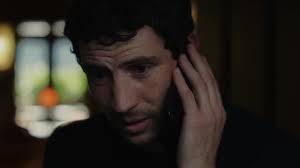
Jud’s demeanor visibly and audibly shifts. He is no longer a murder suspect desperately playing at detective; he is a shepherd tending his flock. He listens as Louise tearfully tells him of her strained relationship with her dying mother. He leaves the room to continue the conversation and prayer, and the audience is left to watch Benoit Blanc alone, wondering at this curious man. Blanc enters the room at the tail end of the prayer, and Jud tells Louise that she is not alone, he is here for her, and she can call him any time, day or night. Watching this interaction seems to be a turning point for Blanc, in which he begins to understand and admire his theistic counterpart. He does not convert to catholicism, but both characters respect one another.
Beside its portrayal of Christianity (though it is connected), I appreciate Fleabag’s representation of difficult, messy, complicated love of other people. The titular character is revealed to have bonded strongly to her best friend after her mother’s death, perhaps in a beautiful way, perhaps in a codependent way, maybe a mix of both. Despite this bond, however, she deeply wounded and betrayed her friend. At the end of the first season, in agony over having wrecked all her relationships, wallowing in self-hatred, Fleabag is on the brink of suicide. At that moment, a man pulls over and asks, “Are you okay?”
The man happens to be a banker who rejected Fleabag’s loan application for her struggling cafe, whom she also met another time at a retreat during which men were supposed to be overcoming their misogyny and harassment of women. They shared a one-sided but kind conversation, in which he essentially confesses his sins and expresses a desire to move on with his life and love his family well.
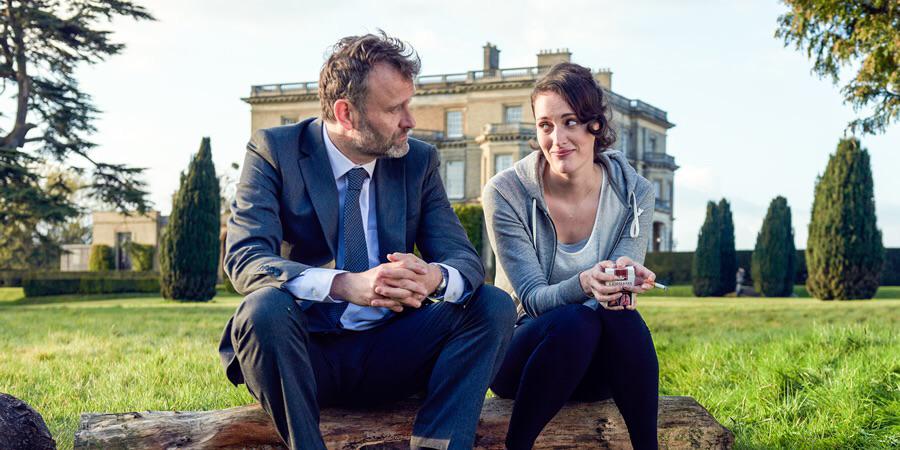
They go to Fleabag’s cafe, and, in an uncharacteristic display of vulnerability, she tearfully tells him of the grief and worry and shame weighing on her as of late. He listens, and after a moment, mutters, “I think I’m going to. . .” and leaves the cafe. The audience is left thinking he has just left her alone and in pain after a shockingly raw conversation, and it appears Fleabag thinks the same. Then the man returns, with his briefcase and laptop, saying he thinks they should re-do her loan interview.
The season ends on an unsettled but hopeful note, and I was left bawling at the display of kindness and second chances between almost-strangers. I have since been pondering the nature of loving people well. I’ve long known persistence is a factor. No one changes overnight, and sometimes it takes saying or doing something over and over, no matter what, for a long time, before it sticks, and even then it may not stick well. We humans are stubborn and fickle. A complication to love that I learned in my late youth and young adulthood is the discernment needed to know whether to let someone push you away, or to resist it. I had a friend who began to say and do things to drive me away. Not wanting to force myself upon her, I obliged. In hindsight, I think it was really a test. She wanted to see if I’d stick around no matter what, and I inadvertently showed her that I would not. It’s not a healthy way to approach friendship, but no one does it all right, and I wish I’d known at the time what was going on. I don’t claim to now know how to tell when someone genuinely wants you to leave them alone, or when it is a cry of, “Prove to me you’re here for the long haul, even if it’s ugly.” I hope that knowing of the phenomenon’s existence will help, though.
One of the factors of love that Fleabag particularly left me contemplating is timing. I’ve a former (and hopefully future) friend with whom I grew out of touch as we both entered adulthood. I had and have an eventful early adulthood, getting married at nineteen and currently having two children at twenty-three. Due to quickly doing the things normally done over time and by slightly older adults, exacerbated by moving between three different towns, and finalized by my forgetfulness and incompetence in long-distance relationships, we fell out of touch. It’s happened with most of my friends from my teenagehood. I’d reach out occasionally, often politely brushed off, more often ignored completely, for the past three or so years. I’ve since learned that this friend has been going through much confusion and strife and suffering, in ways I can’t claim to know or understand much about.
After an email exchange in which I laid bare my heart, my confusion and worry over our relationship, my wondering if I had done something wrong to drive her away, a virtual handshake was given, and we reached a tentative revival of the friendship. My texts still often go unanswered, but more of them receive replies than before. Recently, we had our first actual conversation. I’ve been thinking that sometimes, loving people might be a game of luck. Maybe I was reaching out for years, and it just wasn’t the right time, until a few months back I just happened to strike the right chord at the right moment. Still now, my messages perhaps arrive sometimes too early or late, but once in a while right on time. If only I had the magic of Nanny McPhee. I’ve no idea how this might pan out, but I’m excited to see.
My pastor preached on Sunday about the weightiness of the Christian’s call to forgive. Jesus goes as far as to say, “For if you forgive others their trespasses, your heavenly Father will forgive you, but if you do not forgive others their trespasses, neither will your Father forgive your trespasses.” (Matthew 6:15-15, ESV)
The beauty and messiness of forgiveness is another theme in Fleabag, and one I seem consistently drawn to in stories. The moment in Hamilton that never fails to draw rivers from my eyes is the song “It’s Quiet Uptown,” specifically when the ensemble sings, “Forgiveness, can you imagine? Forgiveness, can you imagine?” The prospect of trying to rebuild a broken marriage after the preventable death of a child sounds unimaginably daunting, but I cannot help but think it must have the most beautiful end.
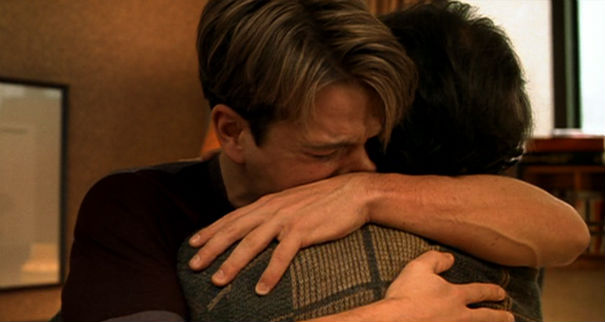
The scene in Good Will Hunting where the therapist who has been berated and disregarded by Will chooses to love him anyway, giving him a tight hug when most needed, and telling him over and over, “It’s not your fault” about the abuse he suffered will live in my head forever.
In Mona Lisa Smile, Betty, after relentlessly judging and insulting Giselle, gloating over her marriage, repeatedly mocking Connie’s appearance, and being a terrible friend to everyone, goes on a tirade against Giselle. Giselle has the wisdom and empathy to see that Betty is actually projecting her own marital problems onto Giselle, and she embraces Betty, choosing to comfort rather than correct.

Yann Martel said, “Fiction and nonfiction are not so easily divided. Fiction may not be real, but it’s true; it goes beyond the garland of facts to get to emotional and psychological truths.”
When I was a kid, I thought that educational media necessarily meant things like documentaries and textbooks. I now understand that while the novels I read and movies I watch aren’t always teaching me grade school subjects like science and history, they are teaching me far more important things, like how to be a person living among other persons.
I’d like to never mess up, never hurt people I love, especially in big and serious ways, but I fear that’s wishful thinking. I’d like for everyone I know to always treat me well, but I know that’s far-fetched, too. So I hope that when I hurt others, when they hurt me, that my story can replicate so many others–that I will have the grace to forgive, that I will accept forgiveness offered, and that we’ll all be better for it.


Leave a comment