I’ve had several concepts of letters to write to you lately, but they’ve all felt half-baked. Unfortunately, nothing more appetizing has presented itself, so I welcome you today to a buffet of unripe, undercooked morsels of ideas.
Your father has been teaching a class on counseling at church for several weeks now. A recent Sunday, the primary discussion of our group centered around potential barriers for pointing out the good work of the Holy Spirit in another’s life. There were seven possible reasons given in the coursework, including self centered-ness that leads to simply not noticing good, or fear of seeming to condone poor behavior in approval of the good. Your mother expressed that she sometimes doesn’t notice or comprehend a good thing happening until it feels too late to point it out. Perhaps she has a student who does something kind for another student, but she doesn’t understand what happened until an hour after the fact. She then feels it would be awkward to bring it up so much later, or it might embarrass the student for her to pause class in order to praise their virtuous deed. I pointed out that oftentimes a little awkwardness is necessary to get to the rewarding things in life, and our fear of it can rob us of later joy.
The principle came easily to my mind, as I had just learnt it again little more than a day prior. I was visiting family in Kansas City. My cousin invited me to explore an event happening downtown, and while I said yes, my mind said, “Absolutely not.”
You see, I’ve grown very comfortable in adulthood. When you’re a kid, you don’t get much choice in the matters of what you do and where you are. If you don’t like the kids at school, that’s too bad. You’re stuck in the same building with them two thirds of the time anyway. If you don’t enjoy doing the dishes, so what? You’ve got a parent to whom you have to answer. Though adulthood has responsibilities, and those pesky dishes haven’t gone away, it also grants more freedom. If I don’t like a peer, no one is forcing me to hang out with them. As a result, any time I have that is not spent doing things that must be done is spent on things I want to do, and what I want to do is rarely difficult or awkward.
As the time to leave grew nearer, I became increasingly nervous. I do like my cousin, but I don’t know him well. A full generation lying between us, he a childless bachelor, me a stay-at-home mom of two, he an agnostic or atheist, me a devout Christian, urban and rural, moviegoer and bookworm, it seemed as if we couldn’t have less in common. If conversation was stilted, if relatabilities and curiosities came like yanked teeth, it could make for a miserable evening.
To my cousin’s credit, he’s a much better conversationalist than myself. He also appears more cool and collected, though perhaps that’s a product of all his time in the service and marketing industries, a duck-above-vs-below-the-water sort of thing. As we walked through old buildings and alleyways, observing art exhibits and vendor booths, the talk meandered from politics to mental health to interior design. Minutes stretched on to hours, and I began to feel that my arms-length relative was becoming a friend.
We spoke about possessions, of the difficulty of knowing what to keep and what to discard, complicated by loved ones responsible for giving the items, more complicated when the memories they carry are a tangled up mess of joy and grief, love and betrayal, hospitality and abandonment. He shared that a small comfort to him is the distinction between two people contained in one person. He tells himself (and me) that the woman who spent many happy years as his best friend is not the same woman who hurt and disappointed him as a partner. He makes the distinction to attach those good memories to the items from that good period in his life.
I don’t know that I can fully get behind the philosophy. As a perpetual attempted-realist, I want to say, “No, no, you’re wrong. Those selfish tendencies were always there, just hidden from view by lack of intimacy, or else people can change for the worse. Be reasonable”–but it’s not my place to comment. Since then, though, I’ve realized that I do the same thing, in a way.
I did ballet (with a mix of various other forms of dance, including jazz, tap, contemporary, and a brief bit of ballroom) for twelve years, all but one spent under the instruction of one woman, whom I’ll call Gianna. After her unexpected death last year, every sad and happy and enigmatic memory came flooding in at once. Things stuffed to the back of my mind were suddenly shoved into the spotlight. After a while of treading this internal torrent, I expressed to a friend, who was even more impacted than I, that I thought the grief was weirdly cathartic, allowing (and forcing) me to sort through whatever complicated relationship my teacher and I had had.
Whatever you picture when you imagine a ballet dancer, I have never looked like that. I am not tall and, even at the low peak of my athletic performance, have never been skinny. It’s a bit of a shame that my most active and fit period coincided with teenage angst, so that I hated my appearance most at the time in my life when I was most conventionally attractive. Oh, well. C’est la vie. I can’t claim to be confident now, but it is harder to hate a body when it has sheltered and ushered into the world two new lives. I may not like how it looks, but it’s done some good work.
In many (or most) dance environments, I probably would have been bullied by adults and kids alike into quitting or developing an eating disorder, but that was not Gianna’s studio. It was surprising to me when I learned about the toxic, competitive environment of many studios, because my teacher had always been relentlessly supportive and encouraging. I never thought to ask her why she chose to dedicate decades of her life to a tiny town, when she could have led a glamorous career elsewhere. East-coast raised and college-educated, I can only assume that her driving force was love of the art and a desire to share it in places it was absent. Religions have missionaries to go to the far reaches of the world to share their good news. Dance has folks like Gianna, traveling hundreds of miles to a “remote” area of the Bible Belt to share the joy of movement.
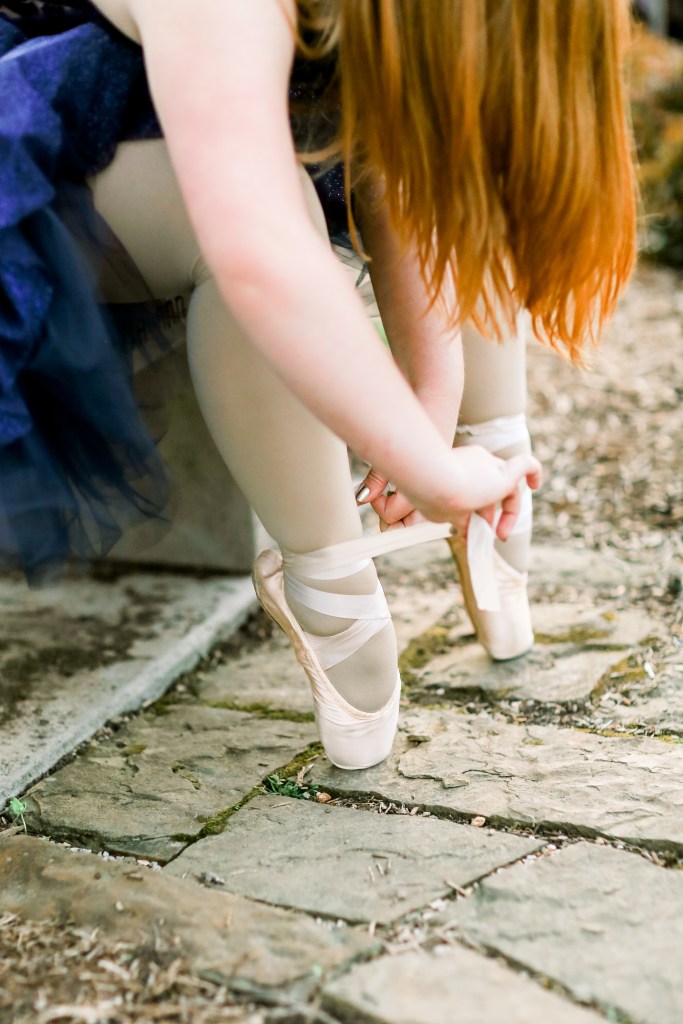
The last two years of my time at the studio were the most intensive, the most educational, and the most fraught. I’d taken up more classes than ever before, and to help pay for them, began working there as both a teacher and administrative assistant. I’d spent at least an hour a week there since I was a small child, but it was now six to eight hours. The idyllic image I had of Gianna and her business began to crack and fade at the edges. I knew she was unorganized, inefficient, but it wasn’t until I got into the nitty gritty details of the paperwork and computer files, and more importantly the desires and fears, that the chaotic visionary of my imagination transformed into someone suffering from untreated ADHD, OCD, anxiety, or a combination of the three.
The business suffered as a result. Communication came later and less clearly. The period of time between choreography being completed and the date of the recital grew shorter and shorter, straining teacher and students alike, pushing the limits of how quickly something could be memorized. Rehearsals became messier, and standards were lowered.
Things really began to go downhill in the spring of 2020. In the midst of frenzied preparation for the end-of-year recital, everything came to a screeching halt. When the only gatherings allowed were strictly familial, restricted to five people or less, there was nothing to be done. There were much bigger things going on in the world, but in our world, the climactic point of the year had been brutally suffocated.
As I sat alone in my room, waiting for the indeterminate end of lockdown, I grew lonely, bored, despondent. Those feelings seemed to be the backdrop of my teenage mind anyway, but the isolation amplified them a thousand fold. I don’t know exactly what was happening to Gianna at the time, but I think it must have been something similar, compounded by the weight and grief of her flailing business, an old project born of love for the art. To pour nearly thirty years into something, only for it to be speeding toward the drain due to forces outside of your control must be unbearable.
When gathering restrictions were lifted (which was much sooner in Missouri than many other states), the damage was already done. Students hadn’t practiced in weeks, had forgotten choreography, had gotten out of shape. The date of the scheduled recital was past, and as it was now deep into summer, many families were leaving for vacation, unwilling to return to classes and go through the ordeal of a weekend of shows. As a result, classes of ten or more dwindled to a meager three or four.
The only other teacher at the time, Clara, had grown to be and still remains a close friend of mine. She was pregnant, and while she could have still participated in the show on its original date, the delay via pandemic meant she would have had to perform six months along, which she (understandably) wasn’t willing to do. She encouraged Gianna to just skip the recital that year, and try again the next. When they could not come to an agreement, Clara left, to care for her own health.
Looking back, I think Gianna knew the studio would not open its doors the following year, and that’s why she clung so tightly to the necessity of a recital. She couldn’t end her dream in such a pathetic way, months of preparation for a performance that would never happen, a casualty of quarantine.
That left me as the only remaining person to help plan, organize, execute. I was honored by the responsibility given, and rose to the occasion. I was only able to do so because of what Gianna had taught me. I’m not a naturally bold, relaxed, or loudly creative person. Gianna was a firecracker. Throughout my more than a decade at her studio, there was a constant tug of war between us: her, a gifted and constant performer, utterly comfortable in her own skin, silly and beautiful and outspoken–and me, a shy, socially awkward, tense child, who’d prefer to pack everything into a little bottle kept inside forever. “Relax your shoulders” was the correction I most often received on the dance floor, and I think my shoulders must still be where I keep all my worries.
Improvisational dance was her favorite way to create, and she always encouraged me to do the same. In an effort to make everyone more comfortable, she’d turn off all the lights, turn on some music, and tell us to just move. No one was watching one another, she’d say, and we need not try to be technically perfect. Just do what the rhythm said. I always hated this exercise, and though in the later years I forced myself to participate, it never got comfortable. I could memorize someone else’s choreography all day, but to make my own was a personal nightmare of sorts.
For that reason it still surprises me that one of the dances of Gianna’s studio’s final recital was entirely my own choreography. I can only attribute that fact to years of gentle pushing, prodding on her part. She saw something in me I never saw in myself, and fought to tease it out. I think the thing that finally worked was when she gave me a key to the studio. I needed to be utterly alone to work, needed to know for sure that no one was watching. That singular number I can really call mine is one of the most precious gifts she gave me.
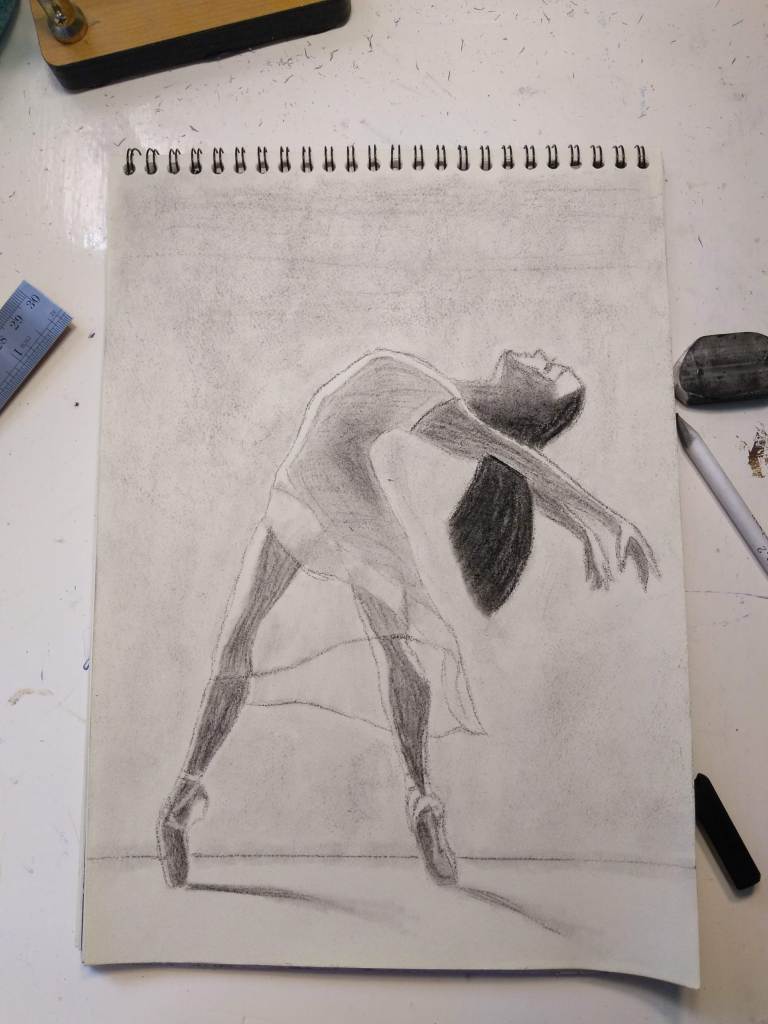
I wish I could end the story there, to say that the studio closing was a bummer, but at least we finished strong.
When Clara decided not to finish the year, when families did not return to classes, Gianna felt betrayed and abandoned. Not only were her business and those who kept it running slipping between her fingers, but she also felt she was losing friends and confidants left and right. As a result, at seventeen, I became more than just a student, assistant teacher, and office organizer. Gianna shared more and more of her personal life with me, her unhealthy marriage, her fear and circular thoughts. She shared her bitterness toward Clara, and I felt stuck between them, loyal to both. She butted heads with a stubborn, opinionated student not unlike herself, and I was asked for advice on managing the student, only to later be asked, “Did Gianna talk about me? What did she say?”
After the end of class, sometimes 9:30 or later at night, I would have packed my bag and remained standing by the door for forty-five minutes or more listening to Gianna’s venting, desperate to leave, but not wanting to be impolite, and very much wanting to help. At least some part of me knew I wasn’t helping, but rather indulging in the nonsensical, neverending rants of a deeply ill woman, but setting boundaries was neither a natural skill nor one I had yet needed to practice. Furthermore, I was trapped in the age-old fear in relationships with folks in deep suffering: If I say, “No, I’m done, I’m not listening anymore,” what if she does something crazy? I had been made to feel like I was the only person Left in her life to love her, and that pressure made me stay put.
The studio had been a safe haven for me. Especially in high school, when my brain was too loud, dancing quieted it. For a few hours, I could pour my concentration into just one thing, something that was fulfilling and joyful. Point your toes, turn out, shoulders down. As I focused on my form, remembering the choreography, feeling the music, all the weariness of the day faded away. It was a realm wholly separate from family or church or school, and Gianna had always been kind, accepting, encouraging. Whether from the exercise, the anxiety relief, or both, I slept better on the nights I had dance classes.
When I became a crappy, makeshift therapist, however, that was no longer the case. I began to dread going to the studio, not out of disenchantment with dancing, but because I knew I’d be there late into the night, helplessly watching one of my mentors and role models’ thoughts spiral ever downward. By the end, I was almost excited to leave. The last recital was bittersweet. It was sad to see the departure of a place that had welcomed me, had been a source of relief and growth and enjoyment for many years, but I was also glad to get away from a situation where I had begun to feel so trapped and helpless and despairing.
I heard from Gianna one more time, the fall of the following year. Coincidentally, she called while I was at a dance class at a new studio. I took classes there for only a few months. I missed the art, and while no studio could ever replace Gianna’s, and all the memories it held, it was nice to to be back in a pair of pointe shoes. The call came during class, so I missed it, but during a break, I texted. “Did you mean to call me, or was it an accident?” During my time at her studio, it was relatively common for her to call me unintentionally. “It was an accident, but we should talk soon,” she replied. I told her when I would be free, but never heard back. I wasn’t surprised, given her forgetfulness.
Three and a half years later, during another visit to Kansas City, I woke up to a text from Clara. “It’s not public knowledge yet, but I didn’t want you to hear from someone else. Gianna passed away yesterday morning.”
A hole opened up in my chest, but I hurriedly tried to patch it up. I didn’t want to leave the bedroom a sobbing mess. I was a little in shock, too. Half a decade younger than my parents, not yet retirement age, she was too young to die. When I’d known her, she was active and beautiful, and it was hard to imagine someone like that dying from anything other than a tragic accident.
In the following weeks, I felt a small variety of emotions. There was your run-of-the-mill grief, but also a fair amount of guilt. I learned that Gianna died of liver cirrhosis. My mother shared that there were times she thought she smelled alcohol on Gianna’s breath, times Gianna’s speech slurred a little. In my teenage naivety, I’d never noticed or realized. With this newfound knowledge, there was no conclusion for me to draw besides that she had died of misery and substance abuse.
Then came the what-ifs. What if I had reached out? What if I called her back after that class? If I had tried to keep a relationship, might things have ended differently? I’d had five years of opportunity, but I hadn’t once checked to see how she was doing. I feared that if I opened up that door, I’d be stuck in the same situation as before: listen, listen, listen, talk, listen, listen, listen some more, and everything stays the same.
I told myself that’s what would have happened. I tried to help before, it didn’t work, Clara tried to help, it didn’t work, she tried to get Gianna to seek professional help, and she wouldn’t, and there was nothing to be done. It didn’t make the guilt go away.
At the funeral, I listened to women share, one after the other, just how wonderful Gianna had been, how she’d forever changed their lives for the better. These were women I’d grown up admiring, some of whom had become friends, and I related to the experience of each of them. Those friendships are one of the things we all praise about Gianna’s studio. The atmosphere was always one of collaboration, not competition, and in such an environment, deep bonds form. My friendship with Clara is one of the best things to come from my time there.
Time passed, and I had more pressing things to think about. My second son was born, and life stayed busy. I’d think of Gianna often, with fondness and sadness, hoping she’d gained some amount of comfort before her death, but afraid she did not. Still, I was coping with the grief okay. This trip to Kansas City sent that illusion crashing down.
John Green often quotes Cheryl Strayed as writing, “When your friend dies, you live on planet My Friend Died, while everyone else lives on planet Earth.” I seem to have dual citizenship, mostly living on Earth, but the smallest of things can send me on a trip to planet Gianna Died.
One time there was a smell–an ordinary, completely mundane smell that I couldn’t even describe–that was so like the smell of Gianna’s studio, I was there. Another time an instrumental song played in a sitcom I’ve watched a dozen times, and this time, I realized it’s a song that was used in one of her recitals.
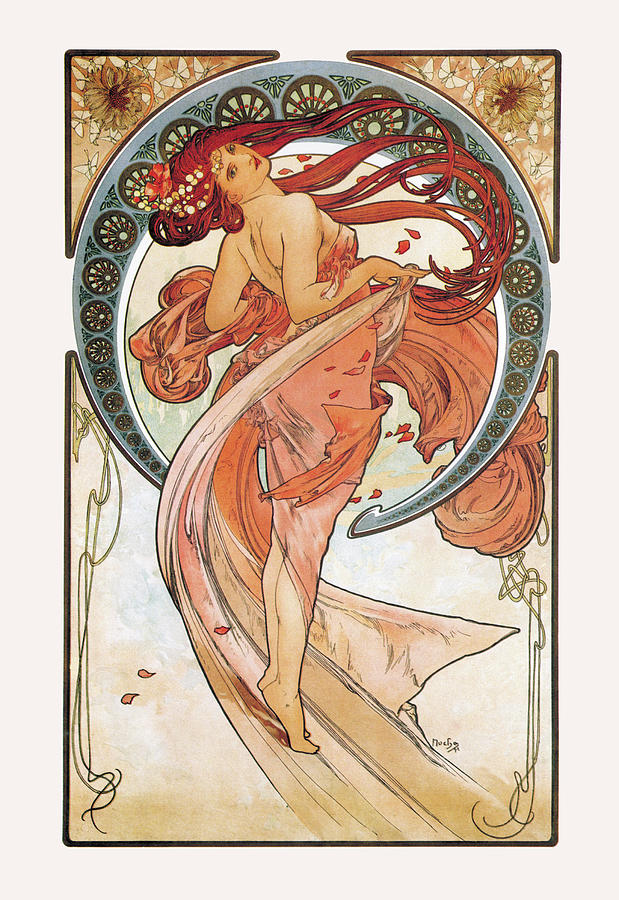
This time, I think it was a cocktail of moments and events that sent me to Gianna Died: being in the same city where I learned of her death; hearing my favorite band sing a new song about a friend so confident in her own skin that she gives others the courage to be themselves, which describes no one from my life so perfectly as Gianna; seeing artwork by Alphonse Mucha, whose mastery of lines and curvature is so captivating that the pictures themselves seem to be in movement; seeing an interpretive dance performance; talking about alcoholism, about moving on from mixed relationships. The ingredients were all there. It makes sense that I traveled to my other new home, but it hasn’t made it any more manageable.
This time, I’ve also felt angry. Why didn’t people closer to Gianna do more? Didn’t they see she was suffering? Didn’t they love her enough to do something about it? I don’t actually know whether or not they did. Perhaps they tried time and time again to help, and she refused. It’s human nature to want a reason, though. The idea that her mental anguish, her substance abuse to cope with it, were either too big to fix, or else she chose to remain there, is unbearable.
I’m also angry at Gianna. Knowing that both I and Clara encouraged her to see a therapist, to work on sorting out whatever went wrong in her brain, whatever she was suffering from, and she didn’t, seems like a pointless loss. While everyone who loved her could listen and advise as much as possible, and arguably we could have done more, it was ultimately her responsibility to take care of her own health, both mental and physical. By choosing to let her wounds fester over years, choosing not to seek treatment, she stole from the world a lot of time to experience and benefit from her wonderful self. I wish she’d taken care of herself, not just for her own sake, but everyone else’s.
The guilt still remains, the worry that her death may in part be due to my own selfishness and unwillingness to be uncomfortable and inconvenienced, but there is also guilt about the grief. It’s been over a year; shouldn’t I be past this by now? Why didn’t I get it all out earlier? I didn’t struggle so much when my grandma died. Shouldn’t family matter more to me than my dance teacher? Of course, Gianna does matter. She was a mentor and friend for the majority of my life, particularly my developing years, and I saw her every week. I wouldn’t be the person I am today without her. Furthermore, my grandma’s death was expected and “normal.” I don’t believe any death is actually meant to be in the world, nor do I think it will always be so, but humans do tend to categorize some death as normal and other as abnormal. When someone dies of cancer at an old age, we deem that at least somewhat acceptable. It’s harder to accept when a vibrant, talented performer dies of mental illness and alcoholism in her fifties.
More than the anger and guilt is gratefulness. Gianna never said an unkind word to me. She pushed me to be a better dancer, but always gently, drew me out of timidity. I still want to be like her when I grow up, loving and funny and never letting what other people think get to you. She welcomed so many people to her studio, and left them all better than she found them. She was fun and genuine and creative and loud, goofy and curious and warm. I don’t think many people master the balance of humility and confidence, but Gianna did. She was hard working and hard playing, graceful and gracious.
I’m still trying to grapple with the dueling memories of this remarkable woman who changed my life. It’s hard to reconcile the decade of happy experiences with the last two years of overwhelming, suffocating ones. The roles of teacher and student were blurred in ways I wish they hadn’t been. I don’t know how to accept the pain Gianna must have felt for her life to end the way it did. I’ll probably always have one foot on Earth and one on planet Gianna died, and I don’t yet know how to live that way.
I wish I had a happier letter to write to you, but I’m currently stuck on another planet, looking for a way home.
~~~~~~~~~~~~~~~~~~~~~~~~~~~~~~~~~~~~~~~~~~~~~~~~~~~~~~~~~~~~~~~~
Check out https://lettersfrompangea.com


Leave a comment